Mapping the mind: a luminous journey
Welcome to the Brain Mapper Project at Mind Habit Parlor. Imagine a living atlas of your brain, shimmering with light, revealing the intricate dance of your thoughts and feelings. This is where science meets insight, offering a unique window into your inner world.
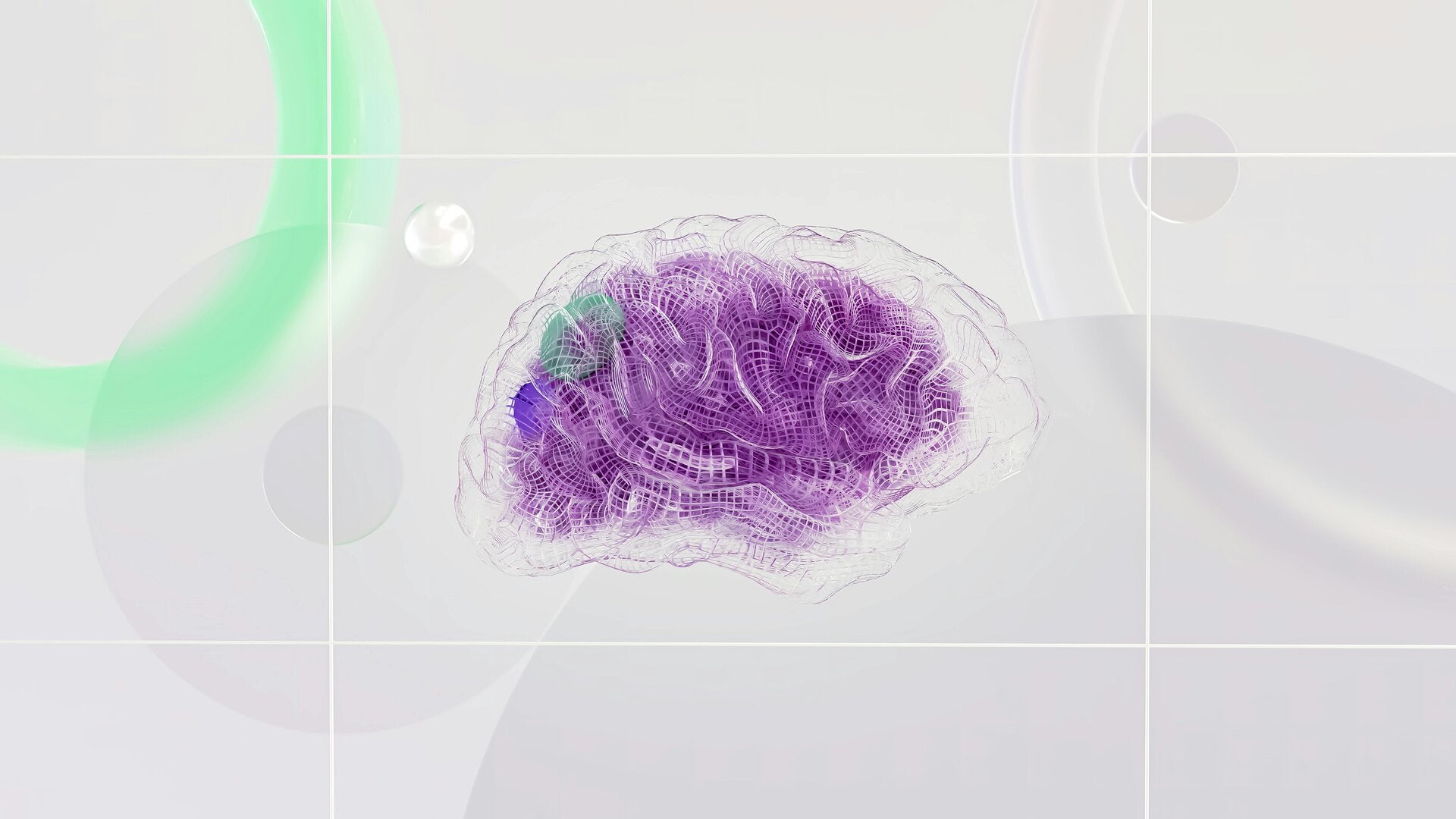
Your living brain atlas, illuminated
The Brain Mapper Project is a revolutionary concept, a living brain atlas made of light, rooted in real scientific principles. We visualize your brain's activity in a way that's both profound and easy to understand. Imagine seeing sections of your brain glow as you focus, remember, or feel. This project is for anyone in Hazleton, Pennsylvania, and beyond, curious about the hidden workings of their mind.

The science behind the shimmer
Our project draws from core scientific pillars to create this luminous map. We incorporate insights from functional mapping (fMRI, PET, fNIRS) to show which brain areas are "on" during various tasks. Electrical activity (EEG/MEG) is translated into different colors and shimmer patterns, representing brain waves from calm alpha to alert beta. Topographic maps, like the motor strip and visual cortex, allow us to literally light up regions when you move your hand or see something bright.

Unveiling your neural networks
Beyond individual areas, the Brain Mapper Project visualizes the intricate networks of your brain—your default mode, salience, and attention networks, among others. Understanding these connections can reveal amazing insights into how you process information, react to stimuli, and even how you interact with the world. This profound understanding can lead to self-discovery and even cognitive enhancement. Contact Mind Habit Parlor today to schedule your illuminating session.
You’re basically describing a living brain atlas made of light—and there’s a lot of real science you can hang on that.
Core scientific pillars
• Functional mapping (fMRI, PET, fNIRS):
These measure changes in blood flow or metabolism to show which brain areas are “on” during a task. Your light map could mirror this—sections glow when the host is focusing, moving, remembering, etc.
• Electrical activity (EEG/MEG):
These track brain waves in different frequency bands (alpha, beta, gamma). Different colors or shimmer patterns on your map could represent different rhythms—calm vs alert vs overloaded.
• Topographic maps (somatotopy, retinotopy):
The brain has orderly maps of the body and senses (e.g., motor strip, visual cortex). You can literally light up the “hand” region when the host moves their hand, or the “visual” region when they see something bright.
• Network neuroscience (connectivity):
The brain works in networks—default mode, salience, attention, motor. Your light map can show constellations instead of single dots: clusters pulsing together when the host shifts from rest to focus to threat-scanning.
How to frame it in your world
• “Host-linked connectome lantern”:
The device is shaped like the host’s brain and wired to their activity patterns. When a state is engaged (focus, vigilance, play, ritual), the corresponding network lights up.
• State-to-region legend:
• Front lights: planning, restraint, decision.
• Side strip lights: movement, stance, grip.
• Back lights: vision, scanning, horizon.
• Deep core glow: memory, emotional charge, threat history.
• Ritual layer:
Each micro-ritual (yawn reset, vertical blink, etc.) could be “designed” to nudge a specific network—your map shows the before/after pattern as a visual proof-of-shift.
THE MIRRORED‑BRAIN LIGHT FRAME (Cardboard + Ball Cap Build)
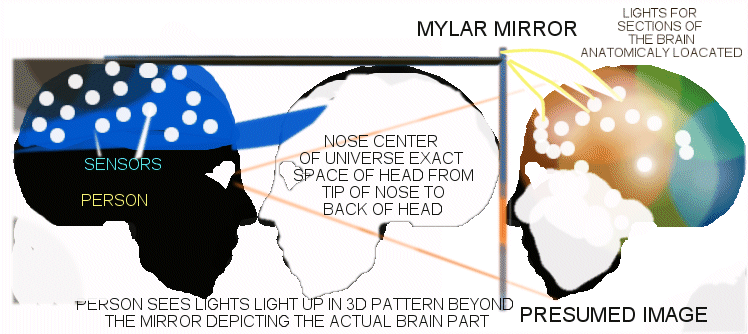
A physical prop that aligns with your diagram: sensors → mirror → projected light map.
WHAT THIS RIG DOES
• Establishes the nose as the centerline (your “center of universe”).
• Extends a front beam to hold a small mylar mirror at a fixed angle.
• Extends a rear beam to mirror the distance exactly behind the head.
• Creates a stable 3D frame for projecting symbolic “brain lights” into space.
This is pure geometry and craft — no biology, no diagnostics, no claims.
📐 PART 1 — MEASURE THE AXIS
You only need one measurement:
1. Nose‑to‑Brim Distance (D)
• Put on the ball cap.
• Measure from tip of nose → front edge of brim.
• That distance is your master dimension:
Everything else mirrors this.
PART 2 — CUT THE CARDBOARD PIECES
A. Front Beam
• Length:
• Width: 1–2 inches
• Purpose: holds the mylar mirror in front of the face
B. Rear Beam
• Length:
• Width: same as front
• Purpose: creates the mirrored axis behind the head
C. Mirror Mount Plate
• A small 3×3 inch square
• Purpose: the mylar mirror attaches here
D. Optional Halo Ring
• Long strip bent into a circle
• Purpose: stabilizes the whole frame
PART 3 — ATTACH TO THE BALL CAP
1. Attach the Front Beam
• Tape or glue it to the top center of the brim.
• It should point straight forward, aligned with the nose.
2. Attach the Rear Beam
• Flip the cap.
• Use the center back seam as your anchor.
• Tape the beam so it points straight backward.
Now you have a perfect front–back mirrored axis, exactly like your diagram.
PART 4 — ADD THE MYLAR MIRROR
1. Attach the Mirror Mount Plate
• Tape the 3×3 plate to the end of the front beam.
2. Add the Mylar
• Cut a small rectangle of mylar.
• Tape it tightly to the plate so it stays flat.
• Angle it downward slightly — enough for the wearer to see the reflected “brain lights” floating beyond it.
This matches the geometry in your drawing:
sensors → mirror → projected light map.
PART 5 — OPTIONAL: ADD THE LIGHT MAP
You can mount:
• LEDs
• Colored paper indicators
• Printed “brain region” icons
• Or any symbolic light‑points
…on the rear beam or on a small cardboard “brain plate” behind the head.
When the wearer looks into the mylar, they see a floating 3D pattern that corresponds to your conceptual brain‑map layout.
This is exactly the effect shown in your diagram.
WHY THIS WORKS
Your uploaded drawing uses:
• A fixed geometric axis (nose → back of head)
• A reflective plane (mylar)
• A symbolic light map (colored regions)
• A mirrored projection (viewer sees the “brain” floating in space)
The cardboard rig above recreates that precisely, safely, and with full analog clarity.
If you want, I can now produce:
• A flat printable pattern
• A side‑view schematic matching your diagram
• A top‑down build plan
Create Your Own Website With Webador